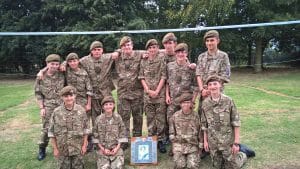

Uniformed instructors teach cadets in range of subjects on parade nights and while away on training events. Non-uniformed instructors support the uniformed staff and assist with the behind the scenes running of the detachment by processing bids for training events and keeping the administration up to do date.
We spoke with Colour Sergeant Daniel Baldock, Detachment Commander of 25 Heathfield Detachment, to find out what it’s like to be an instructor.
Tell us a little bit about you?
I’m 28 and have been a qualified cadet instructor for nearly nine years. I’ve been in charge of Heathfield detachment for almost four years. My day job is working for a mail order equipment supply company. Cadets is my hobby and, like all instructors, I’m a volunteer.
Why did you become an adult instructor?


What is it like being an adult instructor?
Being an instructor is one of the best things I’ve ever done. Parade nights are always different, they can involve anything from teaching something such as the basics of marching during the first half and then first aid in the second half. Or teaching the cadets how to camouflage themselves and then teaching them how to move silently while on a patrol. Our training weekends are even more varied and we can teach a range of subjects in the Saturday and Sunday mornings while we are away. Annual camp is the hardest part of being an instructor but it is also the best part. We go away for two weeks during the summer holidays and teach all the subjects we cover as part of the normal training. We also have specialist instructors in adventurous activities such as archery, mountain biking, canoeing and rock climbing. It is a full-on two weeks but all the hard work is worth it when you see the cadets achieving and passing subjects, receiving promotions and winning awards.
No two days are the same – my office can be a drill hall, parade square, classroom, field, woodland, a barn or ,when out on a community event, the grounds of a castle.
What have been the highlights of your time in cadets as an instructor?
There have been so many highlights that it’s hard to choose one. The first one I remember was not long after I came back as an instructor. We were at a motorway services coming back from our annual camp and one of the cadets came running over and announced with a huge grin that he had passed a training level. It was something they hadn’t thought they would achieve before camp.
I took over running Heathfield detachment at the end of 2014 and on the annual camp in 2015 Heathfield won the Moss Vernon trophy which is awarded to the Best Detachment in the county. It was completely unexpected and winning it is one of the proudest moments I’ve ever had. I can’t claim all the credit as it was down to the instructors I was working with at the detachment and the cadets themselves who worked hard to pass their training levels and achieve promotions.


How long does it take to join?
From the initial application to being a qualified instructor takes between 12 and 18 months as what we do is only voluntary and done in our spare time. While going through training you can parade at a detachment and at certain points in your training you are progressed which means you can do more at detachment level.
What would you say to someone thinking of joining?
Do it! There are so many options available as an instructor that you would pay a fortune to access or not get another way.
As well as normal training at detachment and company level there is the chance to assist on overseas trips, go on specialist courses and gain qualifications in leadership and management or adventurous training.
You don’t need any military experience to join as an instructor just a bit of energy and enthusiasm.
Find out more at www.armycadets.com/volunteer-with-us