

The Observatory Open Evening
9th December
The Sun will already have set at 3.51pm and ASTRONOMICAL TWILIGHT ends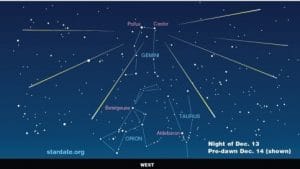 at 5.54pm so it will be completely dark when the Centre re-opens at 6.30pm. The phase of the Moon is 1 day before LAST QUARTER and will not be rising until 11.05pm and will therefore not be visible at all throughout the evening.
To see the sky charts for the 9th December visit Heavens Above. You will need to alter the times and dates in the boxes below the current chart to find out what is in the night sky on the dates of the open evenings.
Uranus and Neptune will already have risen and may also be located during the course of the evening along with deeper sky objects which are much easier to see when there is no Moon. These include the ANDROMEDA GALAXY and some ineresting double stars. As we descend into winter you will see the CONSTELLATION of Orion appearing over the eastern horizon and should reach a high enough elevation to view the beautiful ORION NEBULA. Lovely to look at through binoculars but stunning through a telescope!
Objects to look out for without having to use a telescope include the Pleiades cluster in Taurus, which should be nice and high in the night sky. This is a beautiful knot of stars also known as the 7 sisters. On a very clear evening and with good eyesight you should be able to spot about 7 of the hundreds of stars in this OPEN CLUSTER. The Pleiades cluster is far too big to look at through the telescopes and it is better to view it through a pair of binoculars. Another object to look out for with binoculars is the double cluster in the CONSTELLATION of Perseus.
You should also watch for shooting stars, the fleeting bright streaks of light left behind as meteors enter the Earth’s atmosphere. The 9th December is a few days before the peak activity of the Geminids METEOR SHOWER but still falls within the normal limits of activity which is 8th – 17th December. The Geminids occur as the Earth passes through the debris left behind by the ASTEROID 3200 PHAETON and the radiant, where the meteors appear to come from is in the CONSTELLATION Gemini (see below; image courtesy of stardate.org). These meteors are slow moving with a good proportion of bright events. There are usually about 100 per hour at the peak. You need to look towards the CONSTELLATION Gemini in the east to try and spot these shooting stars and with no Moon to spoil the party spotting them is very favourable this year. This is the richest of all the annual showers.
